Debriefing
💬 Communication Highlight
The Surgical Safety Checklist Part 3: The Debrief
You were introduced to the surgical safety checklist as a patient safety tool in course 1 and the different moments when the Briefing and Time Out occur. Now we will look at the Debrief.
Debriefing Phase (Surgical Safety Checklist):
- Post-op care starts with the OR team performing a debrief prior to transferring the patient to PACU.
- The debriefing phase can be initiated by the surgeon, anesthesia provider, or circulating nurse.
- All interdisciplinary team members, including the scrub nurse, participate in the debriefing phase before transferring the patient to the receiving unit.
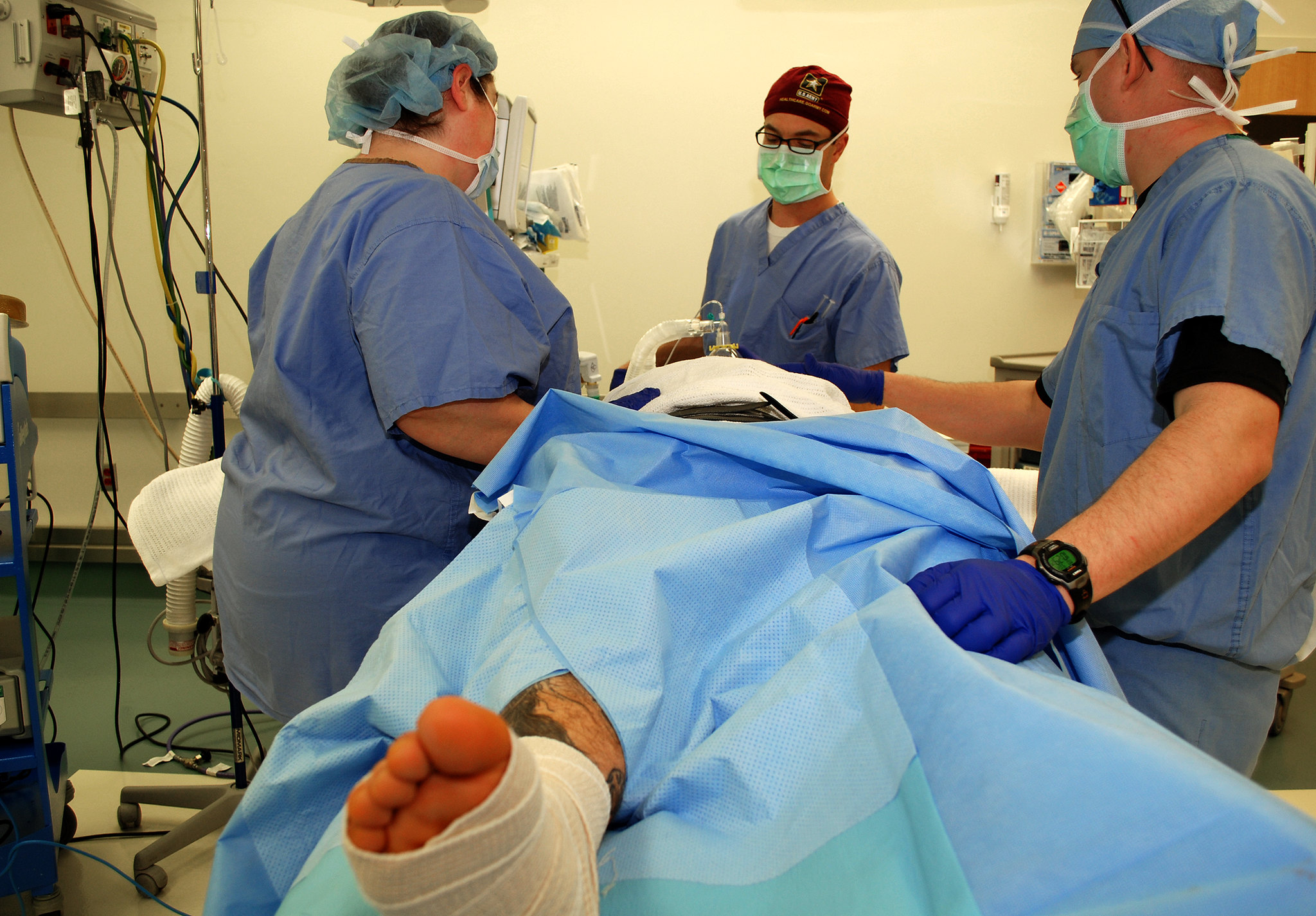
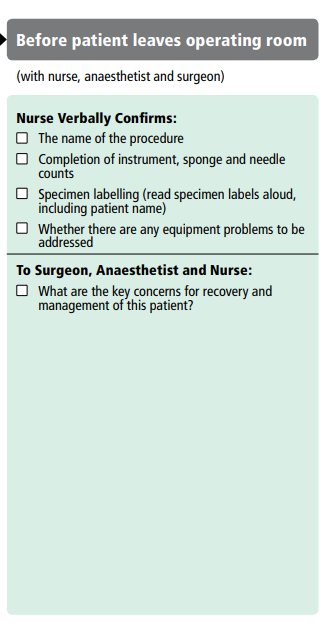
Debriefing before a patient leaves the OR:
- The surgeon reviews with the entire team the procedure, critical intra-op events, and fluid balances/management.
- The anesthetist reviews with the entire team important intra-op events, and recovery plans such as post-op ventilation, pain management, glucose, and temperature.
- The circulating nurse reviews with the entire team the sponge/sharp/instrument counts, specimen labeling/management, and important intra-op events such as equipment malfunction.
- The debrief includes changes to the post-op destination.
- The team reviews if anything could have been done to make the case safer or more efficient.
- The debrief includes the hand off to PACU, the Nursing Unit, or ICU.
Before a patient leaves the operating room, the nurse will verbally confirm:





(ORNAC, 2021)
🧩 Practice Activity: Role
Complete the activity by dragging each step into the correct order. Or, selecting one and using your arrow keys. Select “Check” when you feel confident in your answer(s).
💬 Communication Highlight
The perioperative nurse provides the receiving nurse with a transition of care report that includes:
- The patient’s name, along with other identifiers, such as the armband.
- The type of anesthetic used, allergies, medications, diagnosis, procedure, any complications, fluids given, drains, dressings, tests awaiting results or X-rays ordered, and any advance directives.
If the PACU nurse is busy receiving reports from the surgeon or anesthesia provider, the perioperative nurse provides the patient with supportive care such as warm blankets.
(ORNAC, 2021)
Role of the Perianesthesia RN
- The transfer from OR to PACU is identified as Phase 1 recovery.
- The priority for the perianesthesia RN is airway, breathing, circulation and pain management.
- The patient often has one-on-one monitoring in Phase 1.
- After receiving a report from the anesthesia provider and the perioperative nurse, the PACU RN asks questions to help with any potential complications.
- In ambulatory surgery, the nurse prepares the patient for discharge home in Phase 2. The timing usually depends on the procedure performed and if the patient has met the discharge criteria.
- In Phase 2, the patient may be provided with discharge instructions and a transition to oral analgesics.
Explore the PACU environment by selecting the arrows and click/drag to move front view.
(Odem-Forren, 2019)