Types of Anesthesia
General Anesthesia
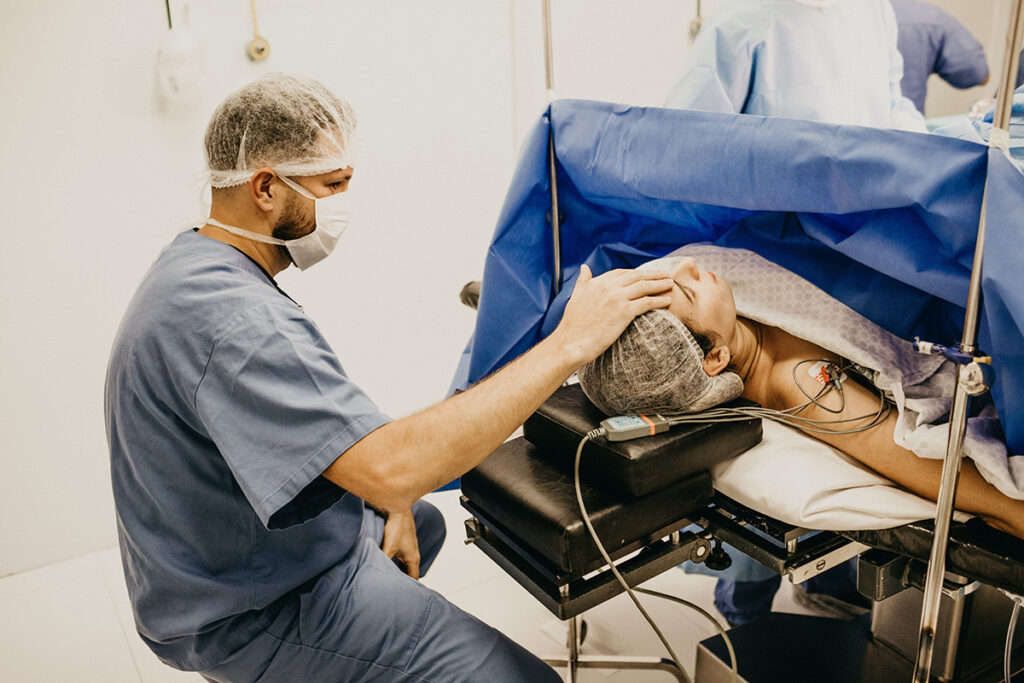
The anesthesia provider may instruct the circulating nurse who stands on the right side of the bed and the patient, to hold the oxygen facemask while the patient is pre-oxygenated with 100% oxygen prior to induction with IV medications or inhalation agents.
After medications are administered the patient experiences hypnosis, analgesia, amnesia, paralysis and the absence of reflexes, and loss of consciousness.
The circulating nurse remains on the patient’s right side to assist the anesthesia provider during induction, and emergence, as well as during intubation and extubation.
Laryngospasm may occur, sometimes after extubation. It is an involuntary protective reflux of the upper respiratory tract.
During intubation, when the anesthesia provider does not have an unobstructed view of the larynx, and the trachea is in the anterior position, the circulating nurse may assist with airway manipulation by performing the BURP (Backward, Upward, Rightward Pressure), which is a modified cricoid pressure. This is done under the direction of the anesthesia provider.
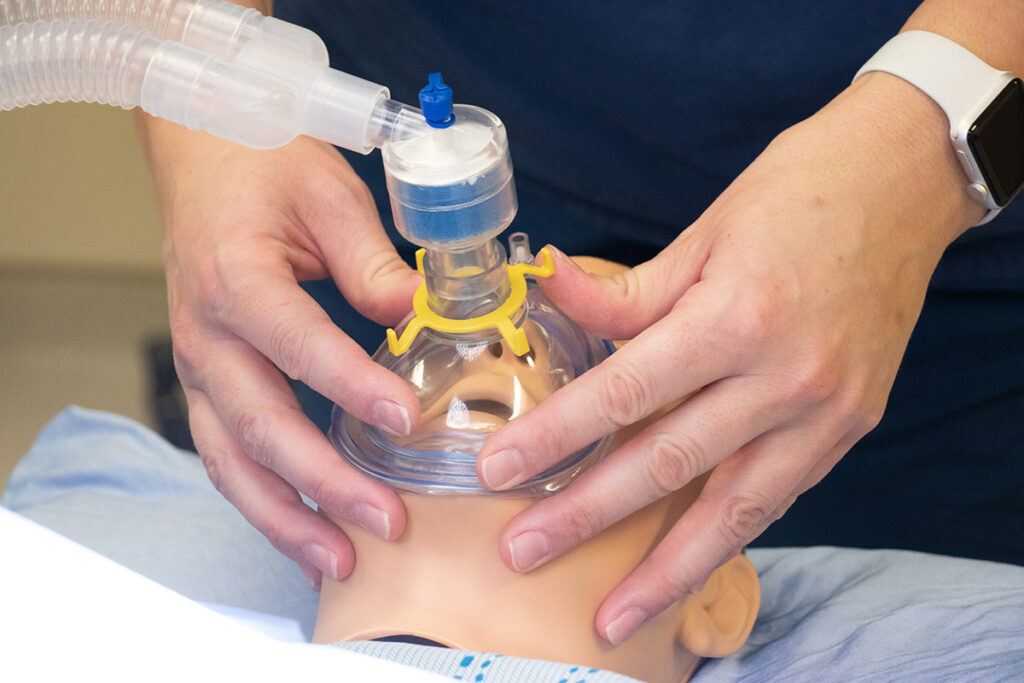
Cricoid Pressure (Sellick Maneuver)
This is performed during rapid sequence induction (RSI) and is done using three fingers to apply pressure at the level of the cricoid cartilage. This results in the esophagus being pushed against the vertebrae and being held in that position until the anesthesia provider instructs the circulating nurse to release the pressure.
- This usually occurs if the NPO status is uncertain, and the procedure is urgent or emergent.
- It is not performed when there is trauma to the anterior neck, an unstable C-Spine, or the patient is vomiting.
(ORNAC, 2021)
Phases of General Anesthesia
Phase 1: Induction
For induction, all required monitors are placed on patients. Then the patient is pre-oxygenated with 100% oxygen for three to four minutes and put to sleep through IV medications or inhalation agents.
Phase 2: Maintenance
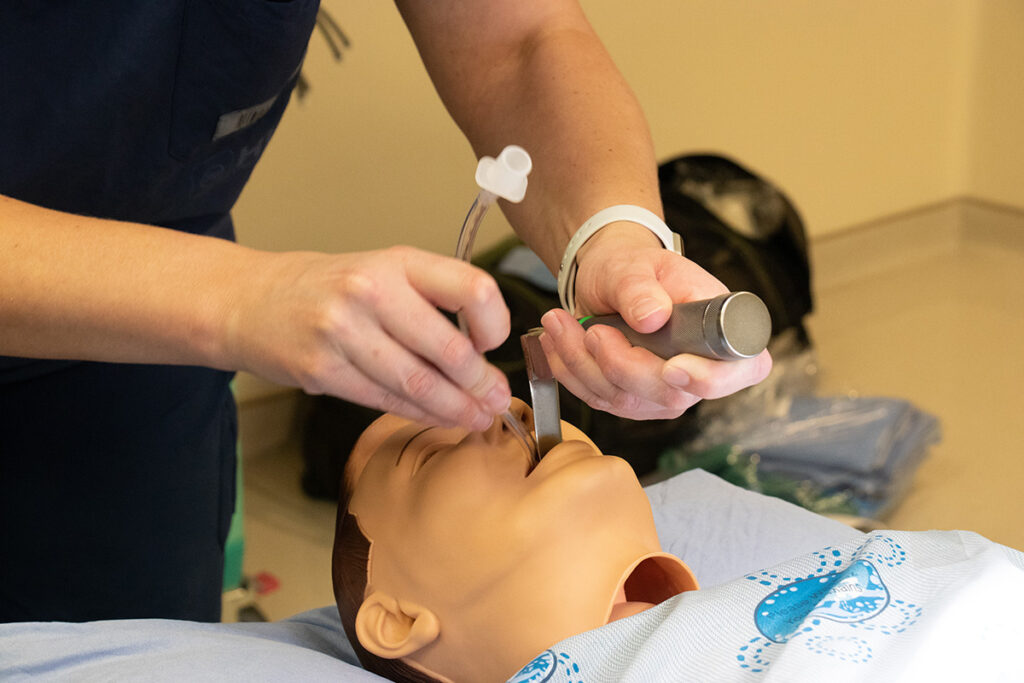
- The patient is kept anesthetized by continuously administering IV medications or inhalation agents. Muscle relaxants may be given as required.
- Inhalation agents used are sevoflurane, isoflurane, and desflurane.
- Total Intravenous Anesthesia (TIVA) uses short-acting IV medications without inhalation agents.
- IV medications used are propofol and remifentanil.
- The airway is maintained.
- IV fluids are infusing.
- The patient is continuously monitored.
Phase 3: Emergence
- The IV medications or inhalation agents are stopped.
- The effects of the agents diminish, and the patient wakes up.
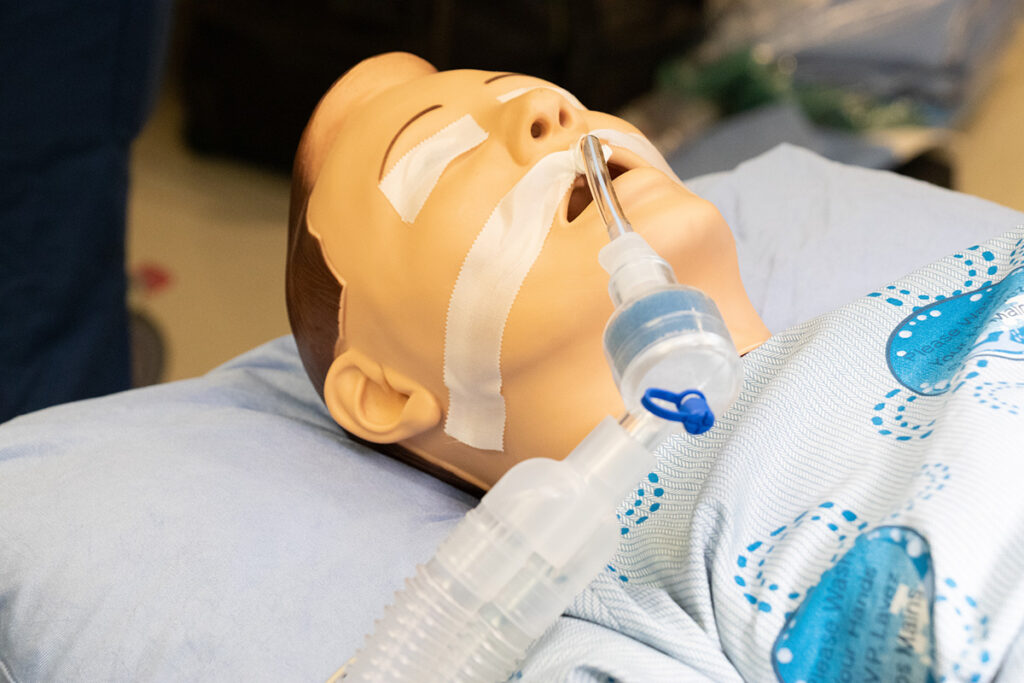
- Once the patient is conscious and can maintain the airway, the tube is removed.
- The patient may thrash about during emergence from anesthetics.
- If reversal agents are needed for relaxants other than succinylcholine (no reversal agent), neostigmine is used.
- Sugammadex is used to reverse rocuronium, vecuronium, and pancuronium.
- Flumazenil is used to reverse midazolam (benzodiazepines).
- Naloxone is used to reverse fentanyl (narcotics).
(ORNAC, 2021)
Regional Anesthesia
Common routes for regional anesthesia are spinal, epidural, caudal, peripheral nerve blocks, and eye blocks. Local anesthetics are injected into an area of the body near nerve fibers to cause a reversible loss of sensation. This may be chosen as an anesthetic for surgery to decrease the length of time in PACU (Post Anesthesia Care Unit), to avoid some side effects of general anesthesia, and for the management of pain.
Type of Extremity Block
Bier Block
Used on upper extremity procedures that are about one hour in length.
Step 1: The double tourniquet cuff is applied but not inflated and an IV catheter is inserted in the hand.
Step 2: The arm is raised, and skin antisepsis is performed on the extremity. The arm is exsanguinated by wrapping from the distal to the proximal end with a sterile Esmarch. Then the proximal cuff is inflated. The Esmarch is unwrapped, rolled again, and kept sterile.
Step 3: The local anesthetic is administered to the IV. The limb is lowered once the anesthetic takes effect. Once lowered the distal cuff is inflated and the proximal cuff is released.
(ORNAC, 2021)
Eye Block
Performed by the surgeon, there are three types of eye blocks:
- Retrobulbar
- Peribulbar
- Subtenon (parabular)
Some medications used for the blocks are:
- 2% lidocaine
- 0.75% bupivacaine
- Hyaluronidase
Moderate Sedation (Conscious Sedation)
- This is an optional anesthetic for specific short-term procedures performed as an ambulatory care surgery.
- The patient must be able to maintain spontaneous ventilation, and protective reflexes and communicate verbally while their experience and/or perception of pain is mitigated.
- Constant monitoring of adverse reactions is required.
- An anesthesia provider may or may not be present during these procedures. In some facilities, a Registered Nurse with additional training may administer and monitor the patient.
(Campbell, 2019)