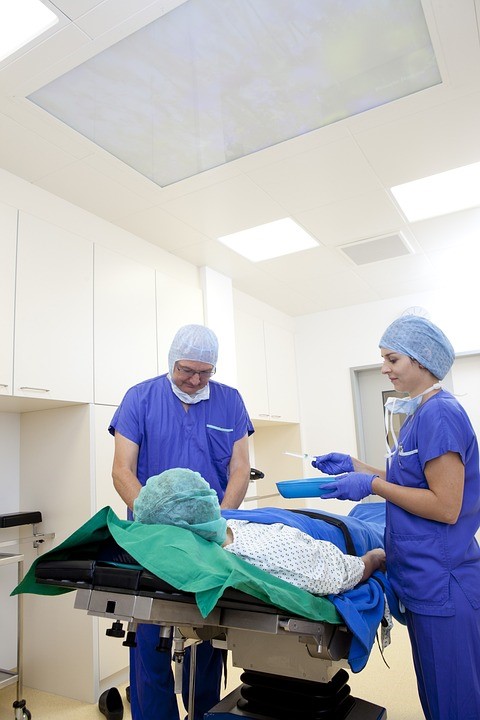
Circulating Nurse and Patient Care
The circulating nurse must have a good understanding of the following:
- The type of anesthetic being administered such as general anesthesia
- The required monitoring such as the pulse oximeter
- The types and location of supplies and equipment required such as for oral airways
- The type of care and support needed for the patient such as a quiet atmosphere, a translator if there is a language barrier, etc.
- How to address questions, fears, or concerns. Nurses should communicate these to the surgeon and/or the anesthesia provider.
- How to decrease patient anxiety by minimizing distractions, noise, and miscommunication by the OR team.
- The expected outcomes and potential complications such as laryngospasm, malignant hyperthermia, etc.
- How to respond to emergencies and/or unexpected events. Examples include being immediately available for the anesthetist, knowing the location of the code blue button, and the crash cart, etc.
(ORNAC, 2021)
Ensuring the Plan of Care
As you learned in the previous modules, the circulating nurse reviews the patient’s hospital record and performs a preoperative assessment to confirm that they are ready for surgery.
When the patient enters the OR, the circulating nurse, in collaboration with the anesthesia provider:
- Assists with the patient transfer to the OR bed.
- Applies monitors such as the pulse oximeter probe, blood pressure cuff, and ECG leads.
- Ensures the end-tidal CO2 line is attached to the anesthesia machine and is available to be attached after intubation.
- Ensures the temperature probe is attached to the anesthesia monitor.
- Monitors the patient’s body temperature (In the first hour, an adult patient loses 0.5°C to 1.5°C of body temperature).
- Checks for intraoperative hypothermia since it is a common complication of surgery under a general anesthetic.
- Assists with the insertion of the IV.
Once a Patient is Anesthetized
- Depending on the type of surgery, the circulating nurse assists with the insertion of arterial lines or other invasive monitoring devices such as pulmonary artery catheters and central venous catheters which are attached to transducers for continuous monitoring.
- A urinary catheter may be required to measure urine output. The circulating nurse may prepare and insert the urinary catheter.
- When positioning the urinary collection bag, it must be easily viewed by the anesthesia provider and below the level of the bladder to allow for flow and prevent bladder distention.
- Patient positioning for surgery occurs when the anesthetist has finished their interventions. Once the positioning is completed, forced-air warming equipment is applied by the circulating nurse.
(ORNAC, 2021)
Anesthesia Medications
🧩 Practice Activity
Please review the key anesthetic medications chart and ensure you understand the reference to the table on pages 119-122 in your Alexander’s Care of the Patient in Surgery to complete the Practice Activity: Commonly Used Anesthetic Gases and Drugs Chart in Blackboard.
🧠 Graded Activity
In Blackboard complete the Graded Activity: Anesthesia Drugs.
Summary
- The surgeon, anesthesia provider, and patient are involved in choosing the type of anesthetic most suitable for the patient and procedure.
- There are several methods of anesthetic administration depending on the procedure.
- The circulating nurse has significant responsibilities when assessing and supporting the anesthesia provider.
- General anesthesia consists of the induction phase, maintenance phase, and emergence phase.
- The circulating nurse must be knowledgeable in the induction and emergence process to provide safe care for the patient. The circulating nurse must understand the healthcare facility’s fasting guidelines for surgery.